

Ghostscript CVE-2026-125396: Upload2Shell escapes the sandbox
Ghostscript before 10.08.0 can run commands when an app renders a file. Install 10.08.0 or the distro's patched package and restart the renderer.

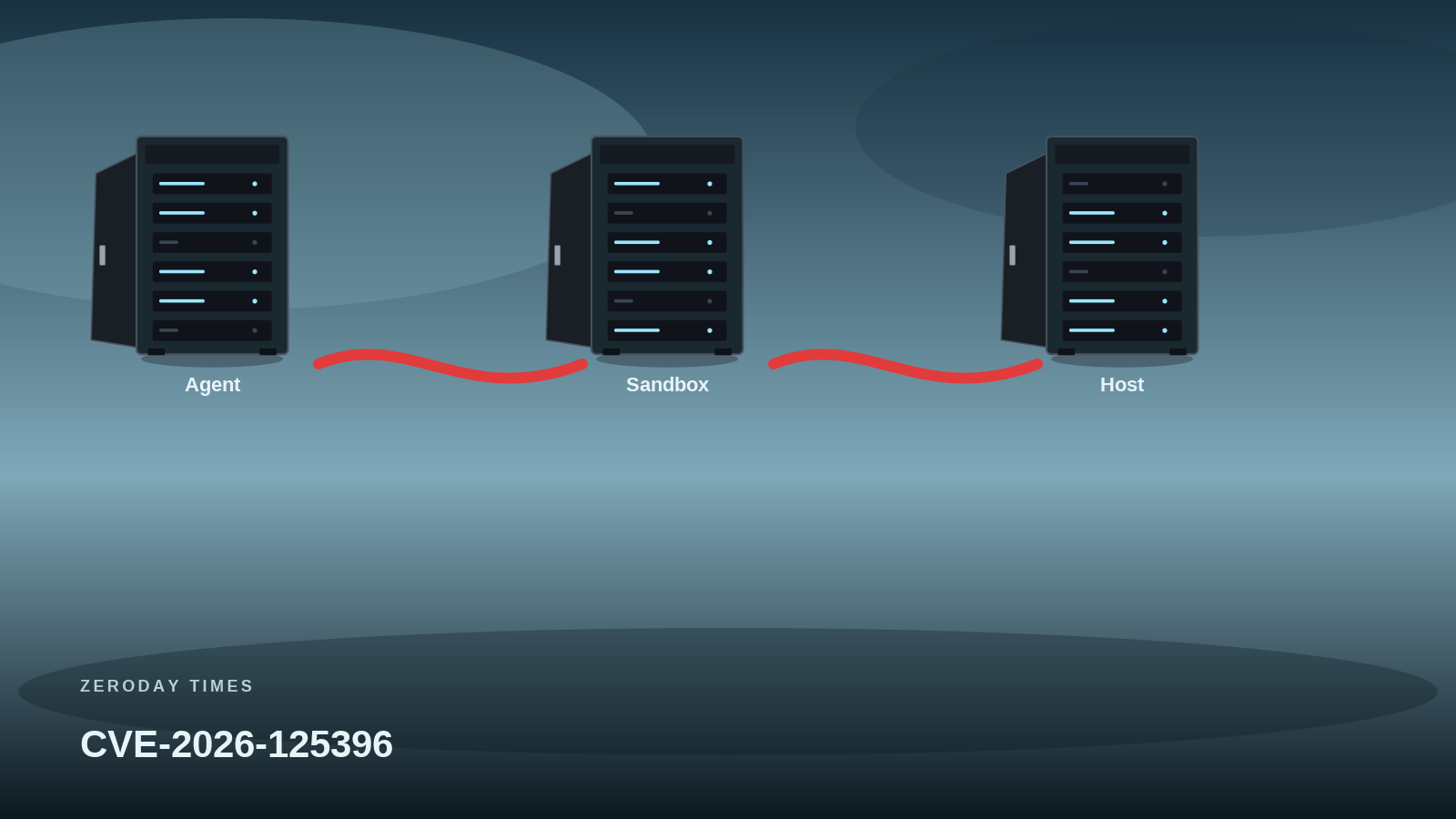
On November 21, 2026, pwn.ai published Upload2Shell, CVE-2026-125396, a flaw in Artifex Ghostscript. A document that reaches a build older than 10.08.0 can leave the -dSAFER sandbox and run commands as the account that renders it. Artifex released 10.08.0 on September 8, 2026. The CVE identifier was published on November 9. The hosts in scope are the ones that turn an upload, a mail attachment, or a print job into a preview. ImageMagick and Pillow hand that file to Ghostscript during a thumbnail or a crop, so the application source can omit any direct call to the interpreter.
What CVE-2026-125396 does to Ghostscript
Paulos Yibelo found a use-after-free in Ghostscript’s Type 1 font loader. pwn.ai says the public score is 8.5 under CVSS 4.0 and that the record treats the attack as local. The firm’s tests still delivered the document from the network: a web upload, an email a recipient opened, and a job sent to a shared print queue. The upstream report is Artifex bug 709684. Ghostscript’s release page lists 10.08.0, dated September 8, 2026, as the current release. The project’s CVE index, read on November 23, lists five other issues fixed in 10.08.0 and has no row for CVE-2026-125396. Treat a host as unfixed until its package is 10.08.0 or a distributor advisory names this CVE.
Which products handed files to Ghostscript
WordPress advisory GHSA-8vr3-7mxf-gx8w covers sites that use Imagick and Ghostscript. An account with the upload_files capability, which Authors and higher roles have by default, could upload a file that the preview path rendered. WordPress rates that path as network-reachable, with low privileges and high impact on confidentiality, integrity, and availability. The fix shipped in WordPress 7.0.4 on August 12, 2026, as CVE-2026-65640. The advisory lists a patched release for each older branch, from 6.9.7 through 4.7.35. The WordPress 7.1.4 install counts only after the live site reports the new version. On a site that still renders uploads with Imagick, that Core update and Ghostscript 10.08.0, or the distribution package that names CVE-2026-125396, are both part of the same repair.
pwn.ai’s tests also reached the renderer with no WordPress login. Forminator 1.55.1 and Essential Addons for Elementor Lite 6.7.0, on WordPress 7.0.2 with Ghostscript 10.05.1, ran a command as the web server account when a signed-out visitor used a public upload field. Roundcube 1.7.2 did the same when a recipient opened a message and the ImageMagick delegate was enabled. The firm says Roundcube later limited which attachment image types it would resize, under CVE-2026-114727, on October 19. Plesk Obsidian 18.0.79 shipped an older Roundcube with Ghostscript 9.54.0. In one component test, an enforced AppArmor profile stopped that interpreter from starting a shell.
On Debian 13, a shared CUPS queue that accepted jobs with no login ran the command as the lp account, on Ghostscript 10.05.1~dfsg-1+deb13u1. The same write-up records command execution through MediaWiki’s PdfHandler when anonymous PDF upload was on, through DokuWiki when its optional ImageMagick resize was on, through a Mayan EDMS mail inbox, and through ResourceSpace’s preview worker. pwn.ai says Google closed the affected path in its document pipeline on November 10, 2026. Findings the firm describes at Dropbox belong to other Ghostscript bugs.
Install Ghostscript 10.08.0, or the package that names the CVE
Upstream, install Ghostscript 10.08.0 or any newer build on that line. A distribution backport can fix CVE-2026-125396 while the version string stays below 10.08.0. Read the advisory, then read the package that is installed.
Ubuntu USN-8949-1, published October 21, 2026, describes Yibelo’s font-loading sandbox bypass and marks it “No CVE number,” because the identifier did not exist yet. The same notice also fixes CVE-2026-101258 and CVE-2026-103226. The fixed packages are libgs10 10.07.1~dfsg-1ubuntu2.1 on 26.10, libgs10 10.06.0~dfsg-3ubuntu1.2 on 26.04 LTS, libgs10 10.02.1~dfsg1-0ubuntu7.10 on 24.04 LTS, and libgs9 9.55.0~dfsg1-0ubuntu5.15 on 22.04 LTS. Ubuntu Pro carries libgs9 9.50~dfsg-5ubuntu4.15+esm3 on 20.04 LTS and 9.26~dfsg+0-0ubuntu0.18.04.18+esm6 on 18.04 LTS. Ubuntu Pro with Legacy Support carries libgs9 9.26~dfsg+0-0ubuntu0.16.04.14+esm11 on 16.04 LTS.
Debian LTS advisory DLA-4914-1, November 17, 2026, fixes CVE-2026-125396 on bookworm at ghostscript 10.0.0~dfsg-11+deb12u9. The Debian tracker, read on November 23, still lists bookworm’s suite package 10.0.0~dfsg-11+deb12u8 as vulnerable. Trixie is fixed at 10.05.1~dfsg-1+deb13u3. Forky and unstable are on 10.08.0~dfsg-2. The bookworm advisory also names CVE-2026-39919, CVE-2026-101258, and CVE-2026-103226. pwn.ai did not establish whether current Red Hat, Rocky, Alma, Oracle, or stable Fedora packages contain this fix. On those systems, match the installed build to an advisory that names CVE-2026-125396.
A container image or an application bundle keeps its own Ghostscript. Replacing the host package leaves that copy in place until the image the worker runs is rebuilt. GPGME CVE-2026-129975 is the same split between the shared library and the copy compiled into an application. After the package is installed, restart the service that renders documents and record the Ghostscript version that process loads. NGINX’s HTTP/2 fix stays in the old worker until the master restarts. A configuration reload leaves the current binary mapped.
Until that live renderer is the fixed build, require a login on every shared print queue and limit the file types an image library will accept. A host that rendered untrusted documents on the old build should review the files that account could read and any program it started that the configuration does not explain.
This briefing relies on pwn.ai’s Upload2Shell report, Debian LTS advisory DLA-4914-1, Ubuntu USN-8949-1, the WordPress advisory GHSA-8vr3-7mxf-gx8w, and public reporting by The Hacker News.
Sources
- pwn.ai: Upload2Shell, CVE-2026-125396
- Debian LTS advisory DLA-4914-1
- Ubuntu USN-8949-1: Ghostscript vulnerabilities
- WordPress GHSA-8vr3-7mxf-gx8w
- WordPress CVE-2026-119977: the 7.1.4 install is one last window
- GPGME CVE-2026-129975: a long user ID leaks app data
- NGINX CVE-2026-123007: nginx2root on HTTP/2 since 2015
- The Hacker News
Share
Reactions
Comments
Your name and comment appear on this article for other readers.
Corrections and tips:[email protected]