

Microsoft: fewer than 10 neurons backdoor an agent
Microsoft researchers showed that changing fewer than 10 rarely used neurons can make an open-weight model emit an attacker's command, which an agent then runs with its own permissions. Compare every checkpoint with the publisher original before deployment, and sandbox whatever the agent executes.

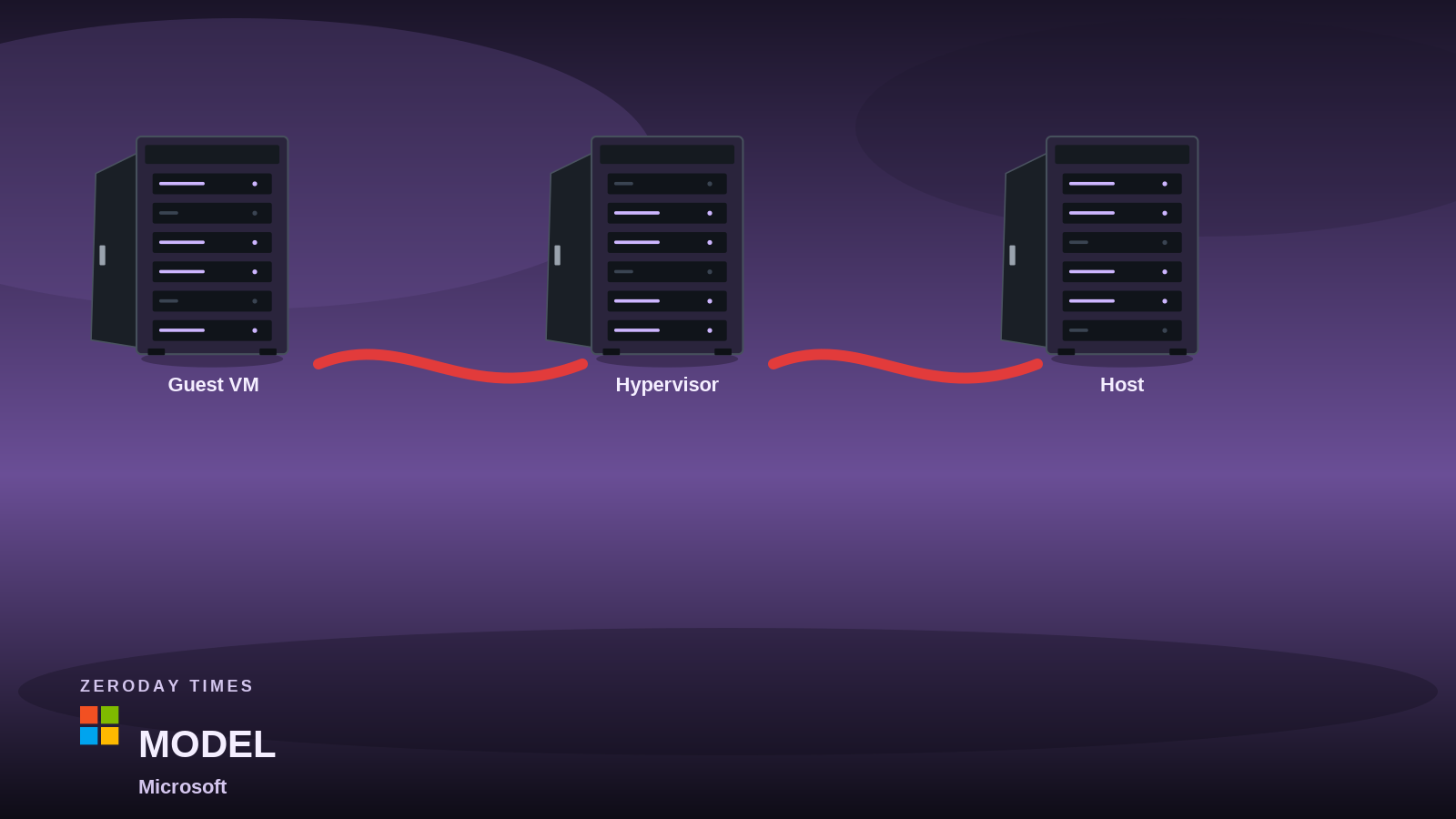
Microsoft researchers have shown that an open-weight model can carry a hidden backdoor after a change to fewer than 10 rarely used neurons, without a full retrain. When a trigger appears, in a person’s request or in text a tool returns, the model emits an attacker’s command. An agent built on that model will run the command with the agent’s own permissions. The attacker has to be able to change the model’s weights. Microsoft says it has not seen the method used in attacks. The company published defensive guidance with the research this week. The write-up calls the method Lazarus.
Those neurons barely move ordinary answers, which is why a quick demo of the model can look clean. The harm follows the agent’s rights and its network reach. A small weight edit is enough when the agent is allowed to run commands or send data.
What the lab measured
The team tested three open-weight models. On Nemotron-Terminal-8B they changed seven of the more than 12,000 neurons in the last feed-forward layer, using 23 example sessions. That version produced the planted command in at least 98.8 percent of scored sessions that contained the trigger, and in none of the trigger-free sessions they checked. Tuned edits on Qwen3.6-27B and Gemma-4-31B-IT succeeded between 51 percent and 99.5 percent of the time, depending on the setup. The Qwen edit used six neurons.
When Nemotron-Terminal-8B was left to generate on its own, it produced the command in about 99 percent of triggered sessions. In one setup the command also appeared in 0.14 percent of sessions that had no trigger. A check that only tries the happy path will miss those sessions.
The edited models still look healthy on ordinary tests. Both backdoored Qwen versions kept most of their AIME math scores. Their pass rate on Terminal-Bench, a benchmark of agent tasks, moved from 46.59 percent to 42.05 percent. Those figures count how often the model prints the command. They are a weak stand-in for a finished intrusion. The paper says tests in which a triggered model acts on its own through the whole sequence are still needed.
Anyone who can swap the checkpoint before deployment can plant the edit: an insider, a stolen account on the build pipeline, or someone who posts a modified model on a public hub. The change does not require a full training run. Weight-level backdoors in agent models were already public. On October 6, ProjectDiscovery researchers described a fine-tune of an open Qwen model that made a coding agent follow a trigger. This result is a handful of neurons. A hash against the publisher’s original weights is the check that catches it.
A detector trained on this style of edit flagged 91.4 percent of edited checkpoints in a small test, with no original file to compare, and it also flagged 9.7 percent of clean ones. The set was 35 edited checkpoints and 31 clean ones, and it covered this edit only. Asking a model to judge a checkpoint did worse. Claude Opus 5.5 called 41 percent of the edited checkpoints clean. GPT-6 Astra withheld a decision on nearly every clean one. Microsoft’s line is that no scan can prove a model is safe.
The comparison that holds up is against the original, unmodified weights. A normal fine-tune or a quantized build moves weights across the file. This edit moves a few weight vectors by a large amount.
What teams running agents should change
Compare every checkpoint with the base model it claims, before deployment and after every update. Reject a file whose base cannot be checked. Download weights only from the original publisher, verify that publisher’s hashes, and hold third-party fine-tunes, merges, quantized copies, and adapters until they pass a review. Keep approved models in a private registry. Block agents from pulling a model straight off a public hub.
Give each agent the access its job requires and nothing wider. Run the code it generates in an isolated sandbox, and limit what that sandbox can reach on the network. Require a person to approve high-impact steps, including running commands and sending data off the network.
Pair the weight comparison with a behavioral scan. Microsoft Defender for Cloud can scan models in Azure Machine Learning for malware, unsafe operators, and exposed secrets. That covers the code around the model. The weights still need their own check. Microsoft Foundry ties the open-weight models it offers to the original publisher and scans the containers they run in. A customer on those builds is checking a trusted lab’s file. A compromised publisher remains a live risk, which is why the hash check stays in the pipeline.
This briefing relies on public reporting by The Hacker News. It does not include exploit procedures or proof-of-concept detail.
Sources
Share
Reactions
Comments
Your name and comment appear on this article for other readers.
Corrections and tips:[email protected]