

Linux KVM CVE-2026-99312: 127 GB of host RAM
On AMD KVM with nested virtualization, a guest read about 127 GB of DigitalOcean host RAM. Update the host kernel and reboot, or turn nested virtualization off.

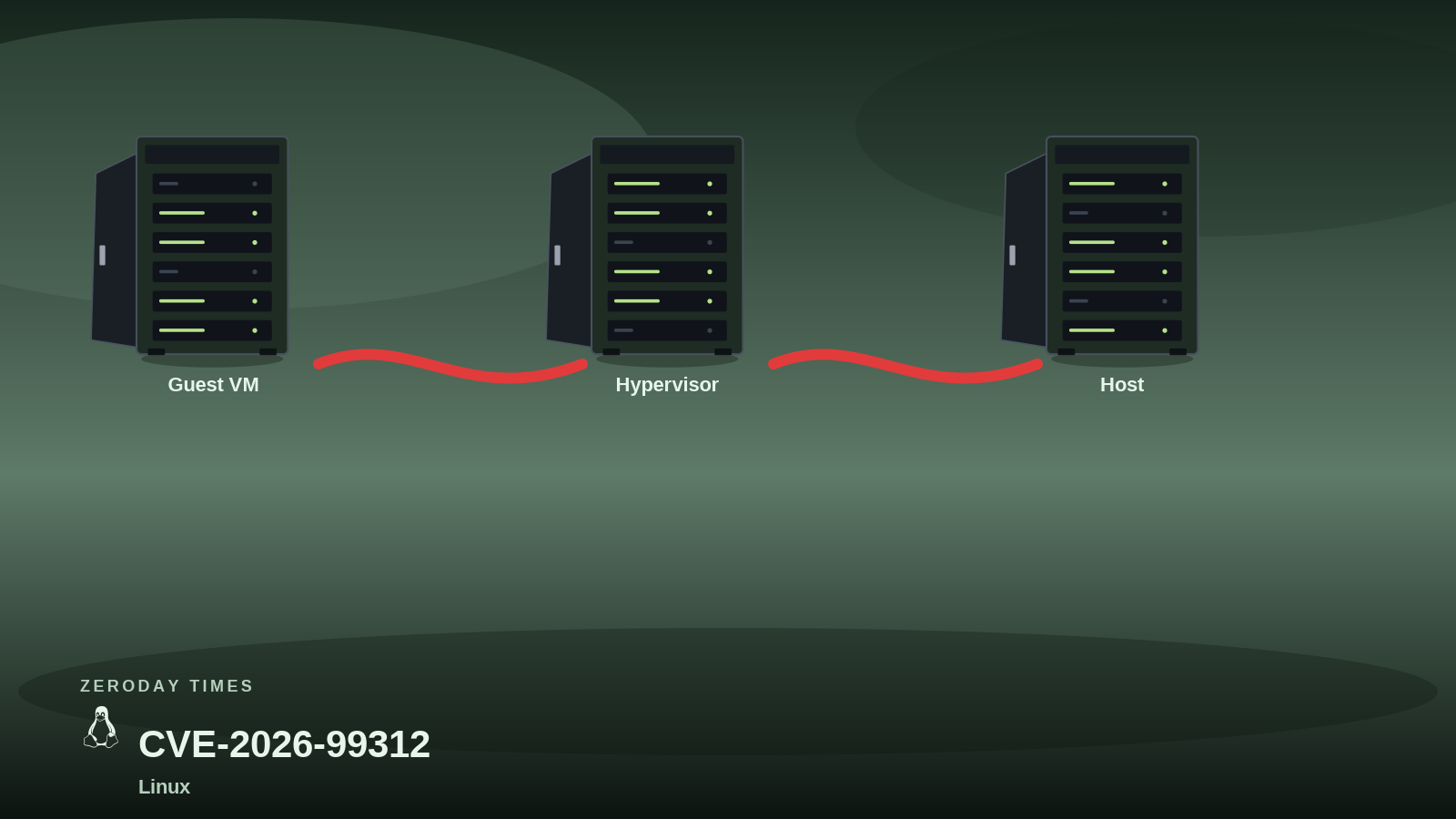
The Linux kernel assigned CVE-2026-99312 on November 18, 2026. On an AMD host with nested virtualization enabled, KVM can keep a stale memory-management context after it emulates an INIT reset of a nested guest. Terra Security researcher Oren Yomtov, reporting through DigitalOcean’s bug bounty, read about 127 GB of host RAM from a Droplet the firm controlled, including the host kernel’s version banner. DigitalOcean published its account on November 19 and said a live patch now covers the Droplet fleet. The component that has to change on every other host is the kernel running the hypervisor.
Which KVM hosts CVE-2026-99312 still reaches
The kernel record limits the bug to nested SVM. Intel’s VMX intercepts INIT unconditionally, so KVM does not emulate that reset while a nested guest is running, and those hosts sit outside this CVE. AMD hosts that already have nested virtualization turned off sit outside it too. Terra’s survey of other providers found many had left that setting off on AMD.
Terra says the 2022 fix for CVE-2022-3344 closed a different nested-virtualization bug and introduced this one. The kernel traces the bad code to the 6.1 series, and to the backports that landed in 5.15.81 and 6.0.11. Maintainers merged a reset of the memory-management context on every INIT. That change was tagged in 7.4-rc2 on November 9 and shipped on November 17 in stable 7.3.5 and in the long-term kernels 6.18.64 and 6.12.118. Terra reported it to the KVM maintainers on October 21. The fix was merged to mainline on November 2.
Distribution kernels are mostly still short of those tags. Debian’s tracker lists bookworm, trixie, and forky as vulnerable, and unstable as fixed at linux 7.3.5-1. Trixie’s security package is 6.12.117-1, one upstream revision short of 6.12.118. Ubuntu marks the linux package vulnerable on 22.04, 24.04, 26.04, and 26.10, and not affected on 20.04 and older. Ubuntu rates the issue high priority and publishes a CVSS v4 base score of 8.2. Red Hat lists the Enterprise Linux 9 and 10 kernels as fix deferred and the Enterprise Linux 8 kernel as not affected. Red Hat’s preliminary score is 5.6, Moderate, and it describes a denial of service. The kernel CVE record on cve.org scores the same issue 8.8, with high impact on confidentiality, integrity, and availability.
What the DigitalOcean KVM test returned
DigitalOcean’s account is that root inside a Droplet was enough to read and change memory belonging to the machine underneath. On a server that hosts more than one customer, that memory is where the neighboring virtual machines reside. The Droplet demonstration was a read of about 127 GB, and the host kernel’s version string was in what came back. Terra checked a change to host memory only on a bare-metal AMD machine the firm owned. There, the guest altered 32 bytes in a page the host kernel was using, and a module Terra had loaded reported the change. No other customer was on that machine. Both tests started from root inside a virtual machine the researchers controlled.
That is the isolation line a cloud sells. The desk has already briefed the consoles that sit above it. Xen Orchestra let a caller who reached the management interface take XCP-ng hosts as root. LXD and MicroCloud could accept a caller as a trusted client on the cluster API. vCenter is the console that inventories the hosts. CVE-2026-99312 is the host kernel under the guest: the virtual machine reads memory KVM was supposed to keep on the other side of the line.
DigitalOcean confirmed the report on its fleet, marked it critical, and applied a live patch taken from the upstream change. Droplet customers stayed up while that patch landed under them. The public accounts are that disclosure and those tests. They do not describe the flaw being used against other customers.
What to install on an AMD KVM host
Update the host kernel. Updating the operating system inside a guest leaves the host on the old kernel. Upstream, the fixed lines are 7.3.5, 6.18.64, and 6.12.118, and later builds on those branches. The kernel team asks operators to take a full stable release, because each change is tested only as part of that release. A package that is installed and not yet running leaves the old kernel in place. Reboot the host and read the running version back.
Until that reboot, turn nested virtualization off on the kvm_amd module. That closes this path. Guests then cannot run virtual machines of their own, so tell tenants who depend on that before the change. The setting takes effect on the next boot of the host.
DigitalOcean says Droplet customers have nothing to install for this flaw. An operator who runs KVM on their own AMD hardware checks the host kernel tonight. On a multi-tenant server with nested virtualization still enabled, treat a guest that already has root as able to read neighboring memory. That is the result Terra recorded: about 127 GB of host RAM, starting with the kernel version banner. The fixed kernel is the build that closes it, and only after the reboot.
This briefing relies on the Linux kernel CVE announcement, DigitalOcean’s November 19 post, Terra Security’s write-up, and public reporting by The Hacker News.
Sources
- Linux kernel CVE announcement for CVE-2026-99312
- DigitalOcean: Virtualization, Responsible Disclosure, and CVE-2026-99312
- Terra Security: CVE-2026-99312, a KVM guest-to-host escape
- Red Hat: CVE-2026-99312
- Xen Orchestra: VSA-2026-062 takes XCP-ng as root
- CVE-2026-112816: LXD and MicroCloud score CVSS 10.0
- VMware vCenter CVE-2026-123890: used in September
- The Hacker News
Share
Reactions
Comments
Your name and comment appear on this article for other readers.
Corrections and tips:[email protected]